
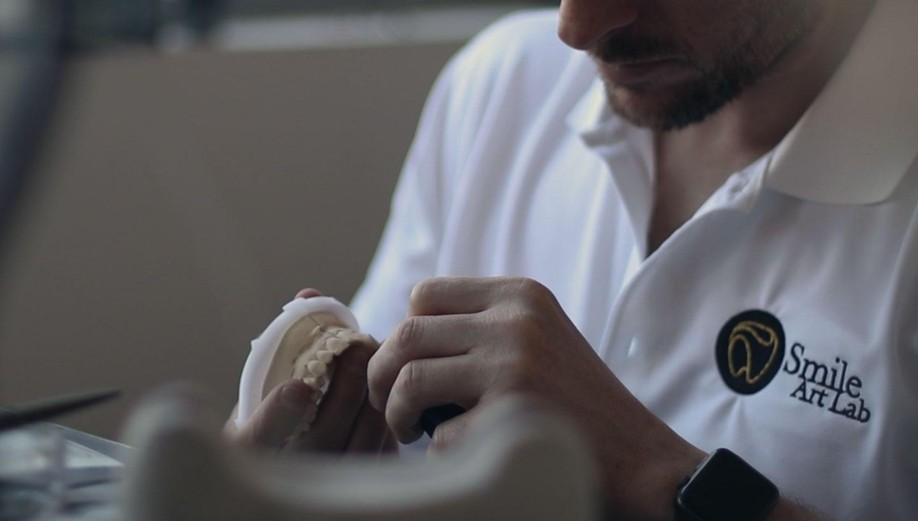
Smile makeovers have changed. Instead of relying on sketches and guesswork, dentists can now plan every detail in 3D before a single tooth is prepared. At Smile Art Lab, we partner with dental practices across Australia to turn scans, photos and clinical goals into precise digital designs. This article explains how digital tools support predictable makeovers and stronger collaboration between clinic and lab.
Key Takeaways
- 3D planning makes smile makeovers more predictable.
- Accurate scans and photos are the foundation of good design.
- 3D mockups help patients understand and approve treatment.
- Clear communication between dentist and lab helps reduce the risk of remakes.
- A digital workflow supports realistic, responsible outcomes.
Why Smile Makeovers Need a Digital Approach
Demand for aesthetic dentistry continues to grow. Mamamia notes that the popularity of veneers has surged in recent years, driven largely by social media. Patients now arrive with images, expectations and very specific ideas about how they want their smile to look.
Those expectations are not always realistic. The Australian Dental Association has raised the question of whether social media is popularising unrealistic smile ideals. The Conversation also observes that social media posts depict a perfect smile as broad, pearly and white, a look that does not suit every face.
Digital tools give dentists a way to manage this. A 3D plan shows what is achievable for each patient, based on their own anatomy rather than a filtered photo.
The Building Blocks of a Digital Smile Makeover
A successful digital makeover depends on the quality of the information that reaches the lab. Most cases rely on a combination of:
- Intraoral Scans: Accurate 3D records of the arches, bite and existing restorations.
- Clinical Photographs: A standard series of full face, smile and retracted views.
- CBCT Data: Useful when implants or complex restorative work are part of the plan.
- Clinical Notes: Patient goals, functional concerns and any limitations.
Research supports this integrated approach. A review in the Australian Dental Journal on digital workflows in prosthodontics describes how combining digital smile design protocols with individual facial scan profiles gives a comprehensive view of aesthetic, functional and biological impact.
How the Lab Turns Records Into a 3D Design
Once records arrive, the design process follows a clear sequence:
- Analysis: Facial midline, lip line, incisal display and tooth proportions are assessed.
- Digital Wax Up: Ideal tooth forms are designed in 3D on the scanned arches.
- Dentist Review: The clinician checks the proposal and requests any changes.
- 3D Mockup: A printed model or trial fitting lets the patient preview the result.
- Final Restorations: Approved designs guide the fabrication of the definitive work.
This process sits at the heart of our digital dentistry service at Smile Art Lab, where every design is built around the dentist’s clinical direction.
The Value of 3D Mockups and Trial Fittings
A 3D mockup turns a digital plan into something a patient can see and feel. It allows the dentist to check phonetics, lip support and aesthetics before committing to irreversible preparation.
Mockups also support informed consent. Patients understand the proposed change more clearly, ask better questions and are more likely to accept a plan that has been tested in their own mouth.
- Confirms tooth length and shape against the lip line.
- Highlights functional issues before final fabrication.
- Gives the patient time to adjust to the new look.
- Provides a clear reference for the final restorations.
Digital Tools Beyond Aesthetics
Smile makeovers often involve more than veneers. Some cases need crowns, implants or changes to the gum line. Digital planning helps coordinate each step.
For implant cases, guided surgery is becoming more common. A recent Australian Dental Journal survey of clinicians explains how static computer assisted implant placement transfers a virtual plan to the surgical site using a 3D printed guide based on radiographic and intraoral scan data.
The broader industry is moving in the same direction. Australasian Dental Practice has urged clinicians to embrace digital impressions and in house 3D printing, noting that digital impressions lead to more reliable and better fitting restorations.
Managing Expectations and Professional Responsibility
Digital tools are powerful, but they do not replace clinical judgement. The Dental Board of Australia has warned that cosmetic procedures such as veneers are not without risk, noting that a recent audit found two thirds of dental practitioners advertising online and almost one in five appearing to breach advertising guidelines.
There are also growing concerns about unsafe trends. The Medical Republic has reported on people filing down their own teeth after following social media influencers. A carefully planned, professionally delivered makeover is the safest alternative.
A 3D design helps dentists set realistic goals, document the agreed plan and protect both the patient and the practice.
Common Pitfalls to Avoid
Even with excellent technology, a few habits can weaken the final result. Watch for these issues when preparing a case:
- Sending photos without a consistent angle, distance or lighting.
- Skipping the bite record or facial reference points.
- Approving a design without testing it as a 3D mockup.
- Leaving patient goals vague or undocumented.
- Changing the plan chairside without informing the lab.
A short checklist before submitting each case saves time for everyone and keeps the design aligned with the clinical plan.
How Smile Art Lab Supports Dental Practices
Smile Art Lab works exclusively with dentists and dental practices. We do not treat patients directly. Our role is to translate your clinical vision into accurate 3D designs and high quality restorations.
- Digital smile design based on your scans, photos and notes.
- 3D mockups and trial fittings for chairside evaluation.
- Clear communication and revisions before final fabrication.
- Support for complex aesthetic and restorative cases.
- Many clinicians have already made the switch to digital smile design.
Conclusion
Digital tools have made smile makeovers more predictable, collaborative and transparent. With accurate records, a clear 3D design and a tested mockup, dentists can deliver results that suit each patient’s face and function. If you would like a reliable lab partner for your next aesthetic case, contact us today and our team will help you plan it in 3D.
FAQs:
What is a digital smile makeover?
It is a smile makeover planned in 3D using scans, photos and design software before any treatment begins.
How does digital smile design help dentists?
It improves case planning, communication with the lab and patient understanding, which reduces adjustments and remakes.
What records does a dental lab need for smile design?
Most labs need intraoral scans, a standard photo series, bite records and clear notes on the patient’s goals.
What is a 3D mockup in cosmetic dentistry?
A 3D mockup is a printed preview of the planned smile that the dentist tries in before final treatment.
Can digital smile design be used for implant cases?
Yes. 3D planning helps align implant position with the final restoration and supports the use of surgical guides.
Does Smile Art Lab work directly with patients?
No. Smile Art Lab works only with dentists and dental practices, supporting their patients through the clinical team.