
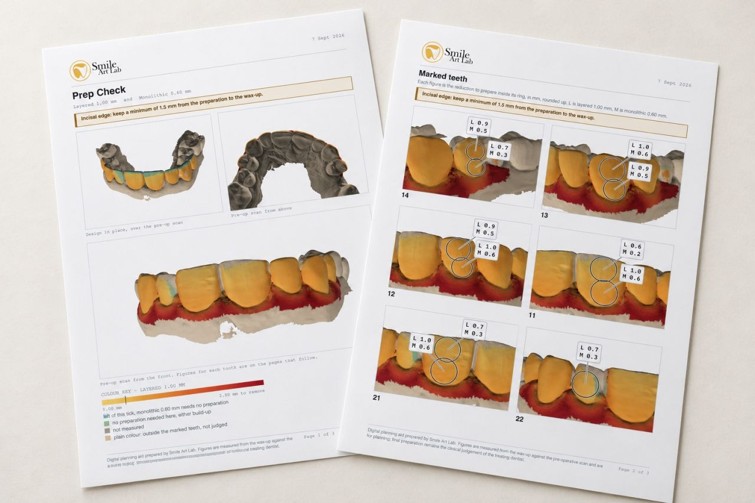
Digital technology is reshaping how dentists diagnose, plan and restore. The right tools improve accuracy, shorten turnaround and make collaboration with your laboratory far smoother. At Smile Art Lab, we partner with dental practices across Australia to turn digital records into precise, natural looking restorations. Here are five technologies that can lift the quality and efficiency of your practice today.
Key Takeaways
- Intraoral scanners streamline records and lab communication.
- CBCT adds 3D insight for implant and complex cases.
- CAD/CAM delivers consistent, precise restorations.
- 3D printing supports models, guides and provisionals.
- 3D digital smile design improves case acceptance.
Why Digital Adoption Matters Now
The dental profession continues to grow. According to the Dental Board of Australia, there were 28,406 registered dental practitioners in 2024/25, an increase of 3.0 percent on the previous year.
As the profession grows, so do patient expectations. Practices are investing to keep pace. A survey of 473 dental practices found that 63 percent planned to invest in at least one clinical technology. CAD/CAM software and digital imaging systems were among the most common priorities.
The same research showed that improving the quality of care was the leading reason for investment, cited by 67 percent of practices. Cost, budget and time were the most common barriers.
1. Intraoral Scanners
Intraoral scanners have become the starting point for many digital workflows. They capture accurate 3D records of the dentition in minutes and send them directly to the laboratory.
Adoption has grown steadily across Australia. Dental Community reported in 2021 that more than 10 percent of dental practices in Australia and New Zealand were already using one leading scanner brand, and that number has continued to rise across the market.
Benefits for Your Practice
- Improved patient comfort compared with conventional trays
- Immediate review of margins and preparations chairside
- Faster lab submission with no physical impressions to post
- Fewer remakes caused by distorted or incomplete impressions
- Digital archives that are easy to store and revisit
For best results, scan in a consistent sequence, capture clear margins and include bite registration and shade photos with each case.
2. Cone Beam CT for 3D Imaging
Cone beam computed tomography provides detailed 3D views of bone, roots and surrounding anatomy. It is especially valuable for implant planning, endodontics, impacted teeth and complex restorative cases.
Knowledge and training remain important. A scoping review published in the Australian Dental Journal by researchers at James Cook University analysed 39 studies and found that practitioners recognised the importance of CBCT, but knowledge was often lacking. The authors noted a strong willingness among practitioners to build their skills.
- Assess available bone height and width before implant placement
- Identify nerves, sinuses and anatomical limits
- Merge 3D imaging with intraoral scans for guided surgery
- Communicate treatment plans clearly with specialists and the lab
3. CAD/CAM Design and Milling
CAD/CAM technology allows restorations to be designed digitally and milled with exceptional precision. For dental laboratories, it supports consistency across crowns, bridges, veneers and implant restorations.
When your digital scans are paired with a laboratory CAD/CAM workflow, you benefit from:
- Accurate margins and contacts that reduce chairside adjustment
- Reliable materials such as zirconia and lithium disilicate
- Predictable turnaround for single units and larger cases
- Easy remanufacture from saved digital designs if needed
Digital design does not replace skill. Experienced technicians still refine anatomy, occlusion and characterisation to achieve natural aesthetics.
4. 3D Printing
3D printing has expanded rapidly in dentistry. It is now used to produce study models, surgical guides, provisional restorations, splints, try ins and components for removable prosthetics.
Australian research is pushing the boundaries further. The University of Queensland’s School of Dentistry has established a research centre using 3D printing to help rebuild teeth, bone and other oral tissues.
For general practice, 3D printing offers:
- Fast production of models and surgical guides
- Accurate try ins before final restorations
- Custom trays, splints and night guards
- Better visualisation for patient discussions
5. 3D Digital Smile Design
3D digital smile design brings together photographs, video, intraoral scans and facial references to plan aesthetic outcomes before treatment starts. It allows the dentist, technician and patient to see the proposed result in 3D.
This approach helps:
- Increase case acceptance through clear visual previews
- Align expectations between patient, dentist and lab
- Guide preparation design with a digital wax up
- Transfer the plan accurately into provisional and final restorations
The Growing Role of AI
Artificial intelligence is starting to support many of these technologies. According to BDO, approximately 12% of Australian dental practices currently use AI tools specifically for appointment scheduling, while around 70% of dentists are interested in using AI for patient education.
AI is also being explored for diagnosis. Bite Magazine reported on an Australian AI platform in development that combines CBCT and intraoral scanning to assess periodontal health, noting that around one in three Australian adults has moderate to severe periodontitis.
AI tools can assist with image analysis and planning, but clinical judgement remains essential.
Choosing Where to Start
Not every practice needs every technology at once. The best starting point depends on your case mix, budget and team skills.
- Restorative focused practices often begin with an intraoral scanner
- Implant focused practices benefit most from CBCT and guided surgery
- Aesthetic focused practices gain value from 3D digital smile design
- All practices can access CAD/CAM and 3D printing through a digital laboratory
Partnering with an experienced lab lets you enjoy the benefits of advanced manufacturing without purchasing every machine yourself.
Making Digital Work With Your Laboratory
Technology delivers its best results when the clinic and laboratory work as one team. To get the most from digital workflows:
- Send complete records including scans, bite, photos and shade details
- Use clear prescriptions with material and design preferences
- Share 3D planning files for implant and aesthetic cases
- Communicate early on complex or high value restorations
- Review designs digitally before final manufacture where possible
Smile Art Lab works directly with dental practices to support this process. At Smile Art Lab, digital dentistry services include 3D design, CAD/CAM manufacturing and digital case submission for clinics Australia wide.
Conclusion
Intraoral scanners, CBCT, CAD/CAM, 3D printing and 3D digital smile design are helping dentists deliver more precise and predictable results. When paired with a skilled dental laboratory, these tools improve efficiency and patient satisfaction. Contact us today to discuss how our digital laboratory services can support your practice and your next case.
FAQs:
What technology do modern dentists use?
Modern dentists use intraoral scanners, CBCT, CAD/CAM systems, 3D printing and digital smile design to improve accuracy and efficiency.
Is an intraoral scanner worth it for a dental practice?
Yes. Intraoral scanners improve patient comfort, speed up lab communication and help reduce remakes caused by impression errors.
What is CBCT used for in dentistry?
CBCT provides 3D images of teeth and bone, supporting implant planning, endodontics and assessment of complex anatomy.
How do dentists send digital scans to a lab?
Dentists export intraoral scan files and upload them securely through the laboratory’s digital case submission system.
What is the difference between CAD/CAM and 3D printing?
CAD/CAM milling removes material from a solid block, while 3D printing builds objects layer by layer.
How does digital smile design help dentists?
It lets dentists plan and preview aesthetic outcomes in 3D, improving communication and case acceptance.