
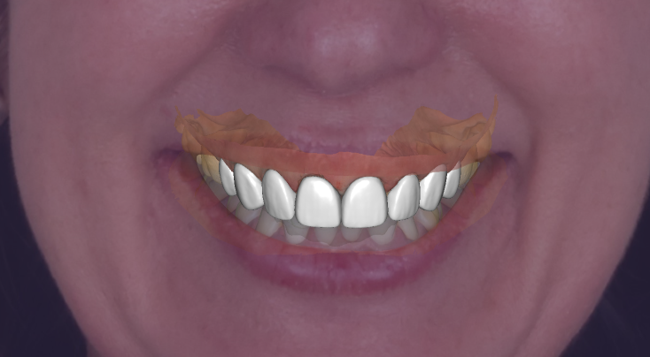
A successful digital smile design workflow depends on the right tools, sound clinical judgement, laboratory expertise, accurate records, and clear communication. At Smile Art Lab, we work alongside dentists using fully digital workflows every day, giving us firsthand insight into which tools support accurate planning, efficient collaboration, and predictable aesthetic outcomes. Here is what matters, and why.
Key Takeaways
- An accurate intraoral scanner is the foundation of any reliable 3D workflow.
- Clinical photographs and intraoral scans provide the essential planning context, with facial scans available as an optional additional reference.
- CAD design software only delivers value when it stays connected to your lab’s process.
- In-house 3D printing speeds up models, guides, and provisional restorations considerably.
- Clear 3D previews and approval steps help identify issues early and reduce the risk of remakes.
Why the Right Tools Matter More Than Ever
Digital dentistry in Australia has moved well past the early adopter stage. Analysis of the local market points to rapid growth in dental 3D printing as practices increasingly adopt digital workflows. Public health teams have taken notice too, with Queensland Health documenting how its dental technicians are integrating 3D printing and AI into everyday prosthetic work. However, dentists do not need to invest in their own design software or 3D printers to benefit from these advancements. We provide laboratory design and production support, helping dental practices access digital dentistry solutions without the added complexity of managing the technology in-house. The focus is on creating a seamless workflow that delivers practical value to both dentists and their patients.
Intraoral Scanners: Where Every Case Begins
Every 3D digital wax-up starts with an accurate scan. Whether you are using iTero, TRIOS, Medit, or Primescan, the scanner feeds into every downstream step, from CAD design through to the final restoration. Regional practices are catching on quickly, too, with a dental clinic opening in Ballarat noted for its accredited digital smile design capability, a sign that scanner-led workflows are no longer confined to capital cities. Scan quality genuinely determines everything that follows, so it pays to:
- Capture full arch detail, not just the immediate area of interest.
- Keep the field dry and free of debris before scanning.
- Submit an STL file or another compatible format agreed with your lab.
3D Facial and Photographic Capture
Clinical photographs and intraoral scans provide the essential information needed to plan an aesthetic case. Together, they help assess tooth proportions, alignment, and the relationship between the teeth and the overall smile. Facial scans can also be included when additional facial context is helpful, but they are optional rather than a requirement. By combining clear clinical photographs with accurate intraoral scans, our team can develop a design that suits the patient’s smile and individual needs. Providing a complete set of clinical photographs, including retracted views, a resting smile, and a full smile, alongside intraoral scans, helps us plan more accurately and minimise the need for revisions.
CAD Design Software That Talks to Your Lab
Design software is where the plan actually takes shape. At Smile Art Lab, our digital dentistry service works from your scans and references to build a 3D digital wax-up, using current platforms to define tooth position, proportions, and midline before any preparation begins. Training in this space continues to expand, with courses run across Australia covering fundamental 3D printing and digital design workflows for dentists entering the space. Good CAD software matters, but it only performs well when the file format, scan quality, and clinical notes travelling with it are complete.
In-House 3D Printing and Prototyping
3D printing has become one of the most practical additions to a digital workflow, used for diagnostic models, surgical guides, and provisional restorations. It shortens the distance between an approved 3D design and something a dentist can actually hold, try in, or hand to a patient. Peer-reviewed research on Australia’s dental workforce has found that hands-on exposure to CAD and digital fabrication meaningfully improves how confidently new dentists engage with these tools, which mirrors what we see with practices that invest early. For a lab, in house printing also means faster proofing on complex full arch cases, where a physical check before final fabrication genuinely reduces the risk of a surprise at try in.
Case Communication and 3D Preview Platforms
None of the above matters if the dentist cannot review and approve the design before production begins. A clear 3D preview step, where you can check proportions, midline, and overall aesthetics on screen, is what actually helps reduce the risk of remakes. Approval steps and communication gaps are two of the most common issues raised. Keeping current on new features and updates matters too, and resources like the Dental Community portal are a useful way for Australian dental professionals to stay across industry news and continuing education.
Keeping the Workflow Compliant
As 3D printing becomes standard in more labs, compliance is catching up. The Australian Dental Industry Association has been working directly with regulators on standards for 3D-printed dental devices, and continuing education remains one of the best ways to stay ahead of these changes. The Australian Dental Association’s biennial Congress now dedicates significant program time to AI and digital dentistry, reflecting just how central these tools have become to everyday practice.
Why Collaboration With Your Lab Still Matters Most
Even with excellent tools, the workflow only holds together with genuine collaboration between dentist and lab. Recent research on digital workflows in prosthodontics published in the Australian Dental Journal describes how laboratory, clinical, and combined workflows each depend on close communication to succeed, not just the technology itself. Smile Art Lab does not treat patients directly. We work exclusively with dentists and dental practices, which means every tool and every step in our process is built around getting your design right the first time.
Conclusion
A seamless digital smile design workflow comes down to accurate scanning, strong 3D references, reliable CAD design, and clear communication at every step. If you would like to discuss your current workflow or start a case with our team, get in touch with us today. We would be glad to help you build a process that consistently delivers what you and your patients expect.
FAQs:
What is digital smile design in dentistry?
Digital smile design uses 2D photographs and 3D digital wax-ups to plan and preview a restoration before treatment begins.
Which intraoral scanners work with a digital smile design workflow?
Most major scanners, including iTero, TRIOS, Medit, and Primescan, are compatible with modern digital smile design workflows.
Do I need 3D printing to use digital smile design?
No, but in-house 3D printing speeds up models, guides, and provisionals, making the overall process faster.
How long does a digital smile design preview usually take?
A 3D preview is typically ready within 48 hours, depending on case complexity and the number of units involved.
Can dentists request changes to a digital smile design before production?
Yes, dentists review and approve the 3D preview, and revisions are made before any physical restoration is fabricated.
Does Smile Art Lab work directly with patients?
No, Smile Art Lab works exclusively with dentists and dental practices, supporting their patients indirectly through the lab.