
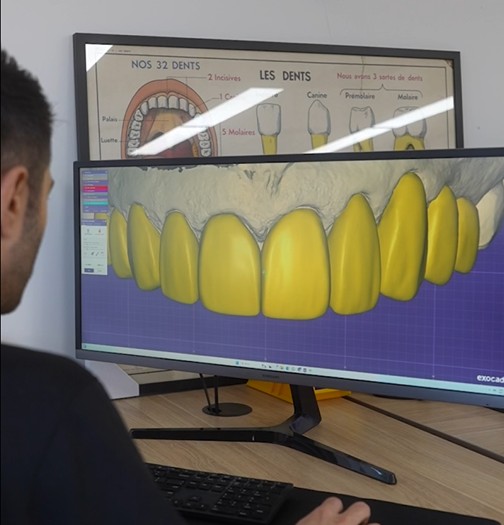
Digital Smile Design has become a transformative tool for contemporary dental laboratories, elevating case predictability, aesthetic quality, and collaborative clarity. At Smile Art Lab, this technology strengthens the link between clinicians and technicians, providing structured visual insight at every stage. The result is a refined pathway that supports consistent outcomes, improved communication, and enhanced workflow confidence in even the most detailed restorative or cosmetic cases.
Key Takeaways
- Digital Smile Design enhances visual accuracy and communication.
- It strengthens aesthetic planning and improves case predictability.
- Laboratories gain measurable efficiency across complex workflows.
- DSD supports more informed decisions on materials and design.
Understanding the Shift Toward Digital Smile Design
- Digital Smile Design (DSD) has reshaped how modern laboratories contribute to case excellence. The technology blends photography, videography, digital analysis, and aesthetic principles into a structured framework that supports fully informed decision-making.
- Its purpose is not to replace clinical insight but to enrich it with quantifiable detail. Recent digital advancements have significantly strengthened diagnostic accuracy and precision planning, with global studies highlighting improved reproducibility when digital tools guide cosmetic workflows.
Why Digital Smile Design Elevates Case Value
1. Precision That Eliminates Guesswork
Digital Smile Design provides structured visual references for tooth proportion, symmetry, midline alignment, and overall aesthetic harmony. By converting subjective interpretation into measurable detail, the process removes uncertainty and allows technicians to work with clear directional guidance. This leads to more consistent design decisions and refined treatment outcomes across a wide range of restorative cases.
Key advantages include:
- Refined tooth form analysis supported by precise visual data.
- Predictable aesthetic visualisation that guides each stage of planning.
- Clearer interpretation of facial dynamics and smile behaviour.
- Improved cross-team communication through shared digital references.
This degree of precision is especially beneficial for complex veneer designs, ceramic reconstructions, and multidisciplinary cosmetic procedures where accuracy is essential.
2. Strengthened Laboratory–Clinician Collaboration
Effective collaboration directly influences the quality and predictability of restorative outcomes. Digital Smile Design establishes a shared visual framework that sharpens communication, ensuring every party works toward the same aesthetic objectives. Early alignment reduces the likelihood of miscommunication and helps limit adjustments during later stages.
Benefits include:
- More accurate design decisions guided by detailed digital previews.
- Reduced risk of remakes due to greater initial clarity.
- Enhanced workflow efficiency throughout the planning and fabrication process.
- Consistent understanding of aesthetic objectives across all contributors.
This streamlined interaction supports smoother progress from planning to final delivery.
3. Improved Material Selection and Case Planning
DSD visuals provide valuable context for selecting appropriate restorative materials. By understanding facial proportions, shade distribution, natural translucency, and surface characteristics, technicians can choose ceramics and layering strategies that best complement the intended outcome.
4. Workflow Efficiency and Fewer Revisions
Greater predictability leads to more efficient workflows. Digital prototypes, simulations, and visual references support quicker approvals and allow technicians to focus time where it delivers the most value. Planned adjustments become more purposeful, and unnecessary changes are substantially reduced.
This structured digital pathway supports:
- Faster coordination between clinical and laboratory teams
- More efficient resource allocation
- Smoother progression from design to fabrication
- Reduced delays during final refinement stages
How Digital Smile Design Enhances Aesthetic Outcomes
Better Interpretation of Facial Proportions
- Digital Smile Design analyses the relationship between smile lines, lip movement, facial symmetry, and overall facial balance.
- This deeper level of evaluation creates a strong aesthetic foundation that supports restorative work with greater precision.
- By mapping these proportions accurately, restorations are designed to sit naturally within the facial framework rather than appearing detached or disproportionate.
This ensures a more harmonious finish that aligns with individual facial dynamics.
Visual Prototyping for Predictable Results
Digital previews act as dependable prototypes that outline design direction before any physical fabrication begins.
These previews support key decisions regarding:
- Veneer mock-ups and aesthetic direction
- Ceramic layering strategies and translucency control
- Adjustments to tooth length, contour, or chroma
- Establishing a balance between functional requirements and visual appeal
By having a visual benchmark at every stage, the workflow becomes more consistent and structured.
This reduces unexpected deviations, lowers revision rates, and supports a more efficient pathway toward finalisation.
Applications of Digital Smile Design in Modern Dentistry
Cosmetic Restorations
Digital Smile Design refines aesthetic objectives for veneer treatments, composite enhancements, and broader cosmetic improvements. Predictable visual guidance helps shape proportion, symmetry, and character, allowing cosmetic outcomes to meet precise artistic objectives.
Complex Rehabilitation
Large-scale restorative cases, such as full-arch designs or multi-unit reconstructions, benefit from the clear mapping provided by DSD. The technology supports alignment between functional needs, structural planning, and aesthetic goals, reducing the risk of unintended discrepancies during later stages.
Implant Aesthetics
Implant aesthetics rely heavily on correct tissue form, emergence profile, and ceramic integration. Comprehensive DSD visuals help outline these features early, guiding technicians in achieving natural contouring, appropriate translucency, and seamless soft-tissue interaction.
Orthodontic Integration
Digital analysis ensures that orthodontic movement aligns with future restorative planning. By outlining ideal tooth positioning and smile dynamics from the beginning, the overall treatment path becomes more cohesive and predictable. This integrated approach supports long-term stability in both function and aesthetics.
Conclusion
Digital Smile Design is reshaping how laboratories support restorative and cosmetic cases, providing clarity, precision, and measurable aesthetic value. Its visual framework strengthens communication, refines material decisions, and enhances the digital workflow, helping laboratories deliver consistently superior outputs. To explore how refined digital workflows can elevate case outcomes, contact us for tailored guidance and support.
FAQs
1. What makes Digital Smile Design valuable for laboratory workflows?
Digital Smile Design enhances accuracy, improves communication, and lowers revision rates by offering clear visual and measurable references.
2. Does DSD improve aesthetic predictability?
Yes. Defined guidelines for facial proportions, symmetry, and tooth morphology contribute to more consistent aesthetic outcomes.
3. Can DSD help refine material selection?
Yes. Digital assessment assists in evaluating shade, translucency, and surface characteristics with greater precision.
4. Is DSD useful for complex restorative cases?
Yes. Structured visual guidance supports detailed planning and improves predictability in multi-stage restorative treatments.
5. Does DSD reduce the need for remakes?
Improved clarity and more precise communication often result in fewer discrepancies, reducing the likelihood of remakes.
6. Can laboratories integrate DSD with existing digital tools?
DSD integrates effectively with various scanning, CAD, imaging, and digital planning systems.